
Cooking With Less Oil: Simple Techniques That Work
Oil is one of the most useful things in a kitchen. It carries flavour, helps food brown and keeps it from sticking. It is also very concentrated: even a small amount adds a lot of calories to a dish. A tablespoon here and there, repeated across several meals a day, adds up faster than most people expect.
Cooking with less oil does not mean cooking without flavour. With a few techniques you can make food that is light, tasty and satisfying. This article covers why it matters and how to do it.
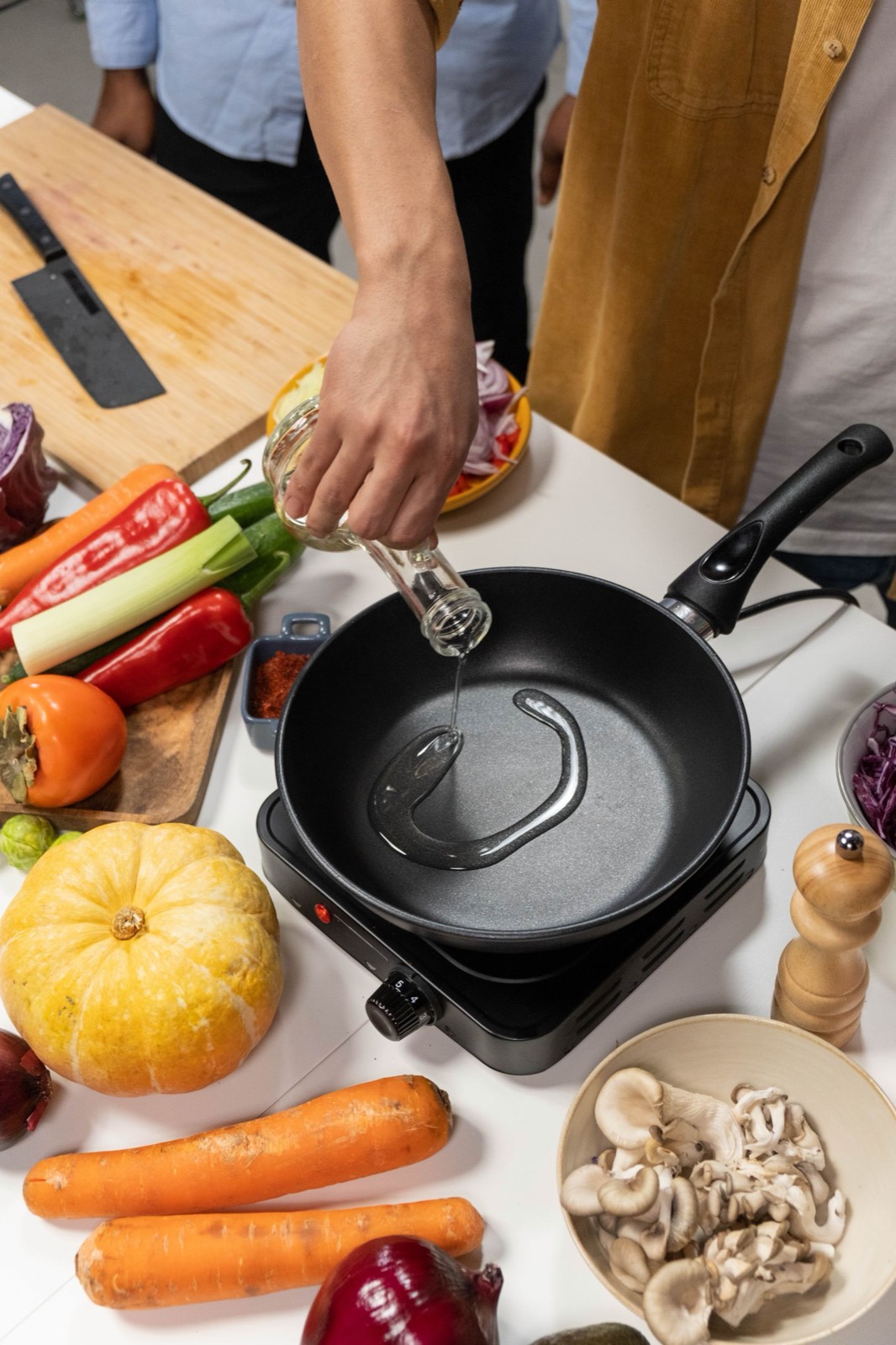
Why Cook With Less Oil?
All cooking oils are dense in calories. Eating less of them is one of the simpler ways to manage the overall energy in a meal without shrinking the vegetables, grains or protein on your plate.
There is a second reason. When oil is heated too hard or reused many times, it can break down and give food a heavy, greasy taste. Using less and cooking at sensible temperatures often makes food taste cleaner.
Fat is not the enemy. Our bodies need some fat, and certain oils, such as olive oil, are a regular part of many traditional diets. The aim is to use oil deliberately, in the amount that helps the dish, instead of pouring it by habit. If you have a medical condition or a special diet, talk to your doctor or a dietitian about what is right for you.
Techniques That Need Little or No Oil
Steaming
Steaming cooks food with hot vapour and needs no oil at all. It suits vegetables, fish, dumplings and rice. Steamed vegetables keep their colour and bite, and you can add flavour afterwards with lemon, fresh herbs, a little soy sauce or a light drizzle of oil at the end.
Grilling
Grilling lets excess fat drip away from the food, and the high heat adds flavour through browning and smoke. Brush the food lightly with oil, or use a marinade that contains only a little. Vegetables, chicken, fish and skewers all grill well.
Roasting and Baking
Roasting in a hot oven browns food well with just a light coating of oil. Toss chopped vegetables with a teaspoon or two of oil in a bowl, then spread them in a single layer. Crowding the tray makes food steam instead of roast, so give the pieces some space. Lining the tray with baking paper also helps prevent sticking.
Poaching and Simmering
Cooking in stock or water keeps food moist with no added fat. Chicken, eggs, beans and many vegetables turn out well this way. Save the cooking liquid, as it can become the base of a soup or sauce.
Dry Toasting
Spices, seeds and nuts can be toasted in a dry pan until fragrant. This brings out their flavour so you need less oil in the rest of the dish.
Smart Pan Habits
Use a Good Non-Stick Pan
A non-stick pan lets you cook with a thin film of oil or even a few drops. Follow the maker’s instructions, avoid metal utensils that scratch the surface, and replace the pan when the coating is worn.
Preheat Before Adding Oil
Heat the pan first, then add a small amount of oil and let it spread. Food added to a properly heated pan is less likely to stick, so you need less oil.
Use a Little Water or Stock
For sautéing onions, garlic or vegetables, add a splash of water or stock to the pan as it dries out instead of adding more oil. This is sometimes called water-sautéing.
Measure Your Oil
It is easy to pour far more than you meant to. Try measuring with a teaspoon or tablespoon for a few weeks. A spray bottle, or a brush used to spread a thin layer, are other easy ways to control the amount.
Choosing Your Oil
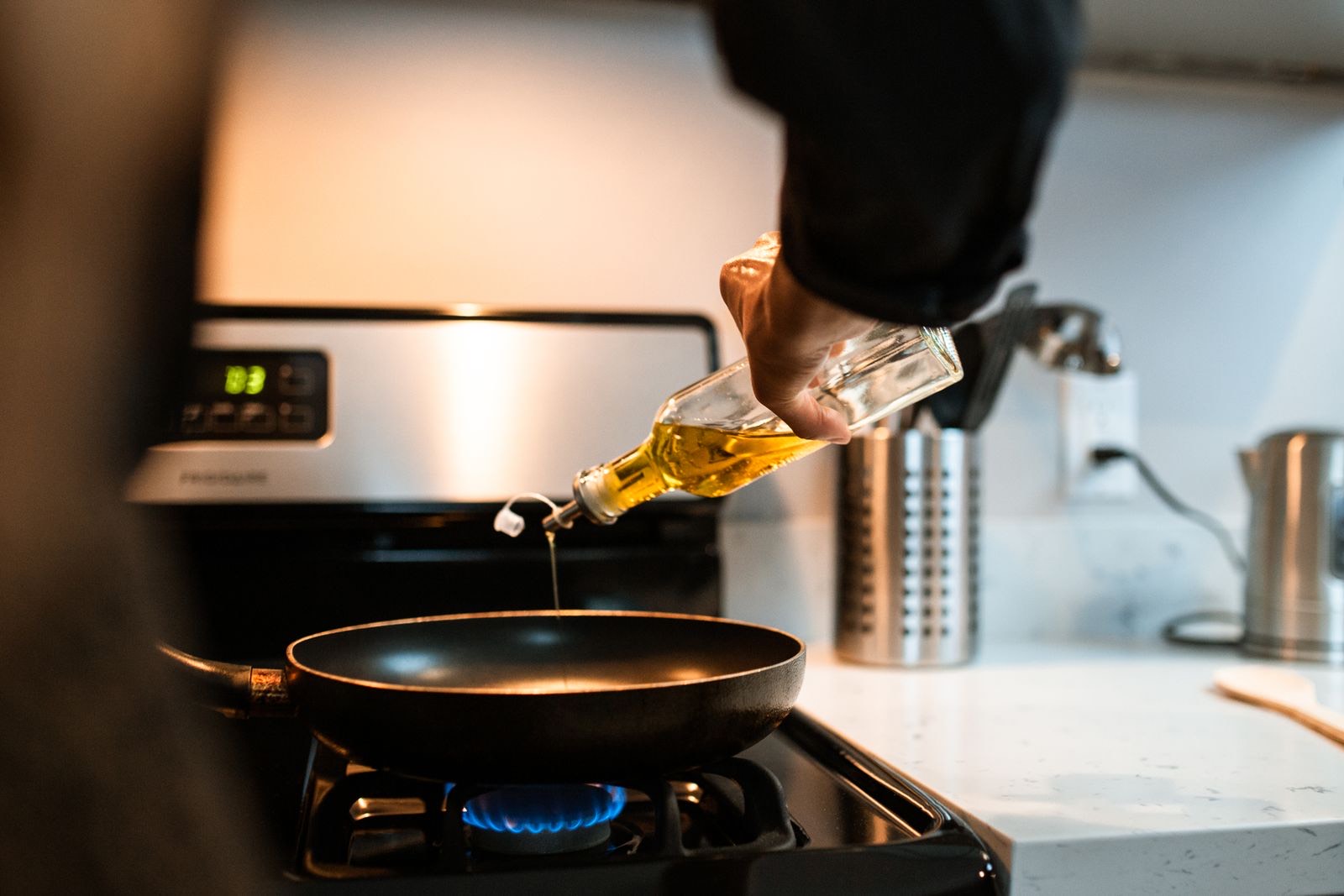
Different oils suit different jobs.
- Olive oil is a good everyday choice for dressings, light sautéing and finishing dishes. We wrote about it in our article on olive oil benefits and uses.
- Neutral oils such as sunflower or rapeseed are common for general cooking.
- Strongly flavoured oils such as sesame or mustard oil are best used in small amounts, where their taste is part of the dish.
Check the label for the oil’s suggested use. Do not overheat oil until it smokes, and avoid reusing frying oil many times, since it deteriorates with heat.
Flavour Without Fat
Taking out some oil is easier if you add flavour in other ways:
- Fresh herbs, garlic, ginger and chilli
- Lemon, lime or a splash of vinegar
- Whole and ground spices, toasted first
- Yoghurt or tomato-based marinades
- A little salt, added with care
Browning also creates flavour. Letting onions and vegetables take colour in a hot pan builds depth that does not depend on extra oil.
A Few Everyday Swaps
- Bake or air-fry potatoes instead of deep-frying them.
- Steam or grill fish and chicken instead of pan-frying in a lot of oil.
- Make salad dressings with more lemon juice or vinegar and less oil.
- Stir-fry in a small amount of oil, keeping the pan hot and the ingredients moving.
How We Cook at Fresh Elements
Our approach is fresh, natural dishes prepared with care, minimal oil and no added MSG. We wash our vegetables in filtered water, and we let good ingredients and simple techniques do most of the work.
Come and Eat With Us
You do not have to give up the food you love to cook with less oil. Start small: measure what you pour, try one new technique this week, and see how it goes. When you would like a meal made for you, have a look at our menu and come and visit us in Lakeside, Pokhara.
Hungry yet? Come taste it for yourself.